Table Number Co · buyer guide
How to count table numbers and reserved markers
A table number identifies a service position. A reserved marker communicates a temporary status. Count the physical number signs required by your approved service layout, then count how many reservation markers you need in use at the same time. Do not assume that every table needs a permanent reserved sign or that the number of reservations in a day equals the number of markers to buy.
Reviewed 2026-09-05 · AI-assisted editorial review. General buying guidance; illustrative scenarios are not customer case studies. Images are AI-generated concepts.
Keep explicit spares and replacement numbers separate from the active layout. A spare sign carrying table 12 cannot automatically replace a missing table 18 sign. If you want interchangeable holders with replaceable number inserts, specify that construction and count holders and inserts as different items. The quantity should describe the objects staff actually need, not simply the highest number in the numbering sequence.
Two readable sides can still be one physical marker
WebstaurantStore lists double-sided table-number cards in its restaurant table-number range. That is a market example of one object carrying information on two sides, not a specification or stock claim for our proposed designs.
When requesting custom markers, say whether one complete object should show the same message on both sides, different messages, or information on only one side. Two printed or engraved faces do not automatically mean two signs. A reversible number-and-reserved concept also needs an operational review: staff must be able to show the intended status without hiding information they still need for service.
Confirm the selected physical format before comparing quantities or prices. A loose number card, a holder with an insert and an engraved freestanding tent are different deliverables. Ask the quote to identify what a unit includes, and keep any additional insert sets or holders visible as separate components.
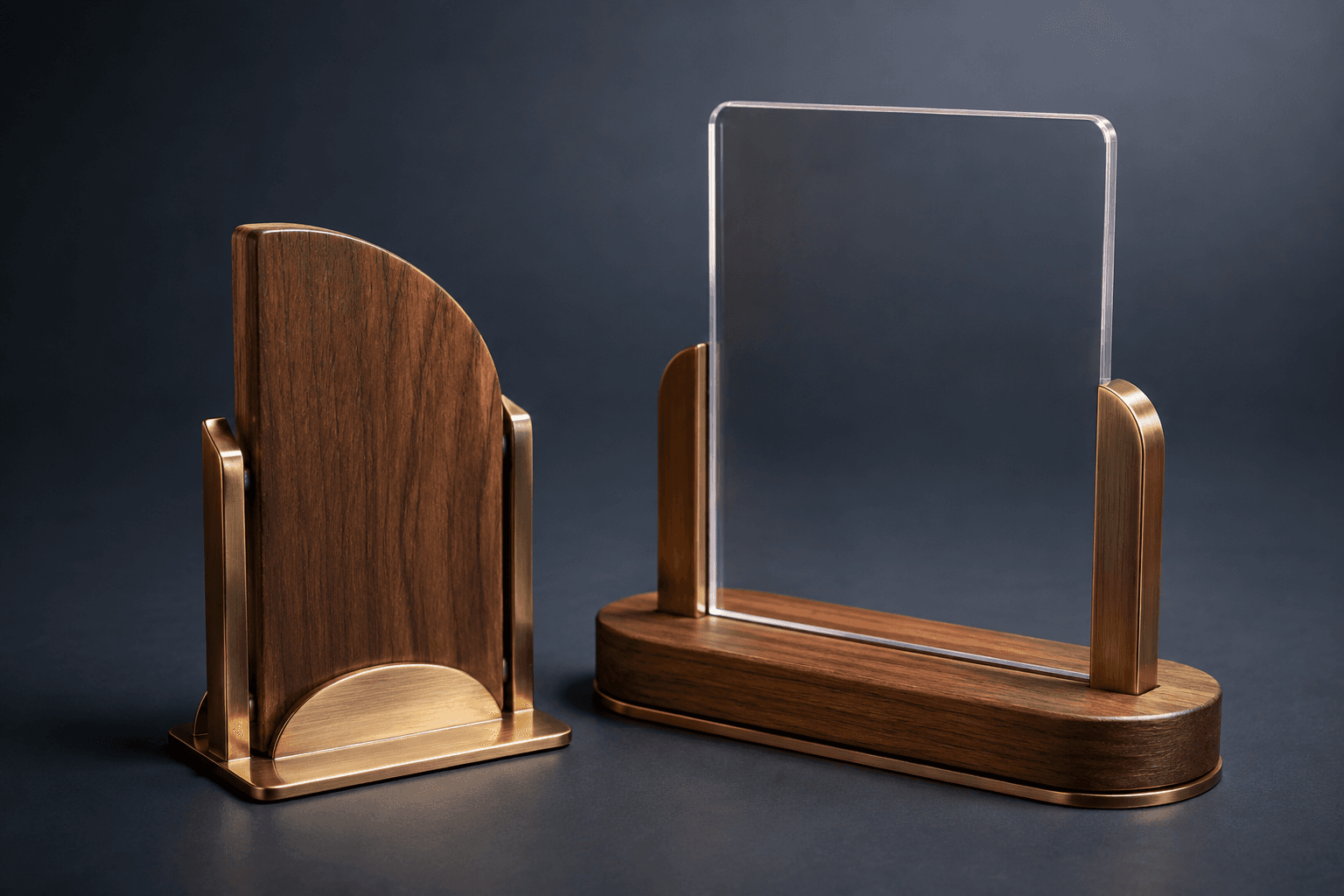
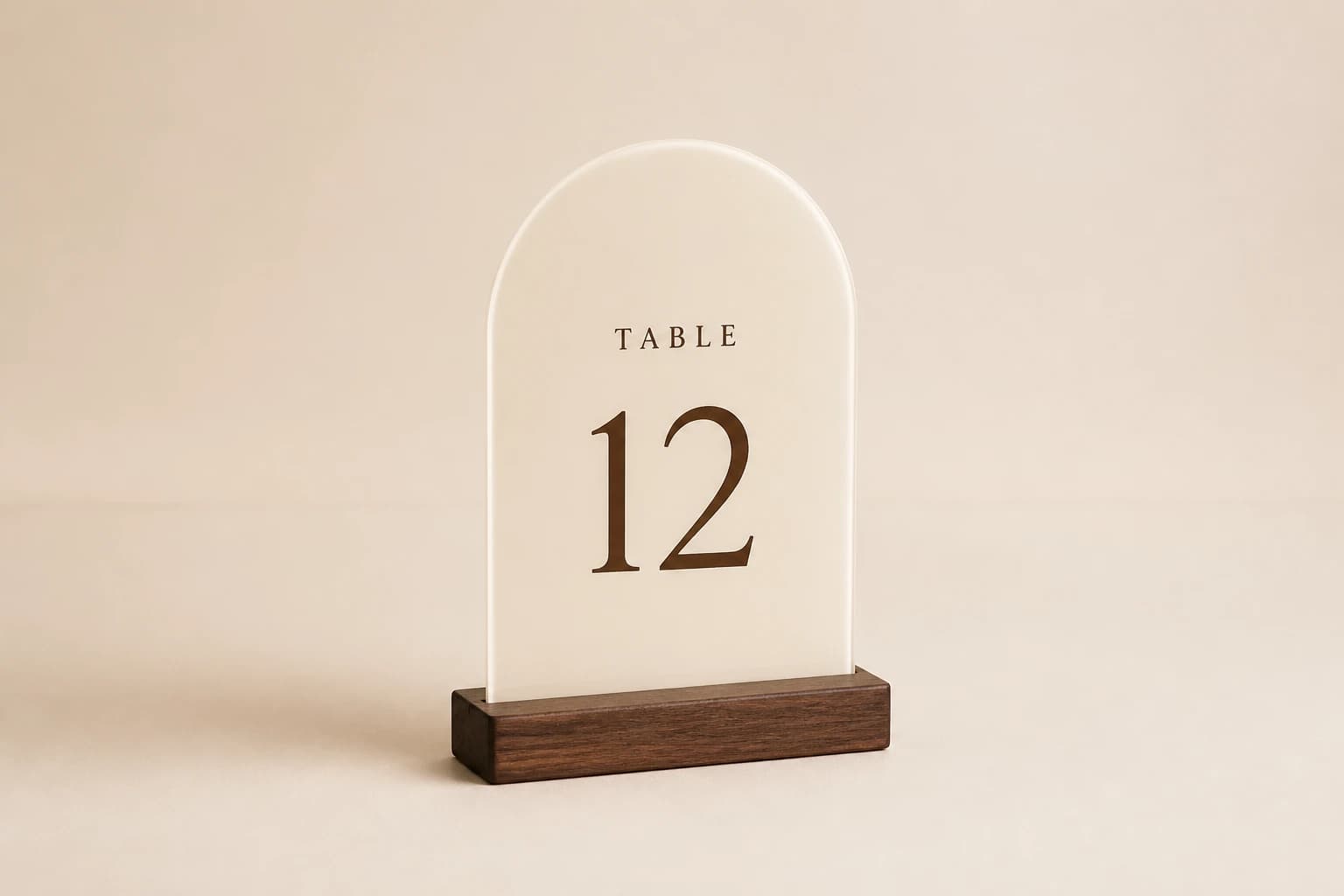
Sources: WebstaurantStore: Bulk Restaurant Table Number Tents and Stands
Use the actual service positions as the source
Start with the table references staff use in the approved layout. Include the indoor area, patio, bar or other service zones only where the project actually requires signs. A numbering sequence may skip values or use prefixes. Preserve those identifiers instead of filling gaps because a complete numeric series looks neater in a spreadsheet.
Record whether the public marker should match the internal service reference exactly. Some operations may use a guest-facing number alongside a more detailed internal location reference. If so, keep both fields and identify which one appears on the sign. The production team should reproduce the approved public value without deciding how the restaurant's service system is organized.
For tables that are joined or separated, define the intended sign arrangement with the operating team. A joined table might retain one approved identity or use a specific combination of markers. Count the arrangement the team actually uses. Do not assume that joining two tables halves every sign requirement or that a large party needs one marker per guest.
Count simultaneous use and the reset workflow
A reserved marker is usually issued, removed and reused according to the restaurant's service process. Plan the maximum simultaneous marked positions you intend to support, then add any explicit extras chosen by the operator. The number of booking records over a whole day does not establish how many physical markers must be on tables at once.
Decide where markers are stored and who resets them when a table becomes available. A sign left in place after the reservation is seated or canceled can communicate the wrong status even though the product itself is intact. Keep the marker's role simple and make sure staff understand when it should be shown.
If the restaurant wants named reservation cards or event-specific inserts, those introduce a different content and privacy workflow from a generic reserved marker. Specify who prepares the approved public wording and which personal details should be omitted. Count the reusable holders separately from any one-time printed cards.
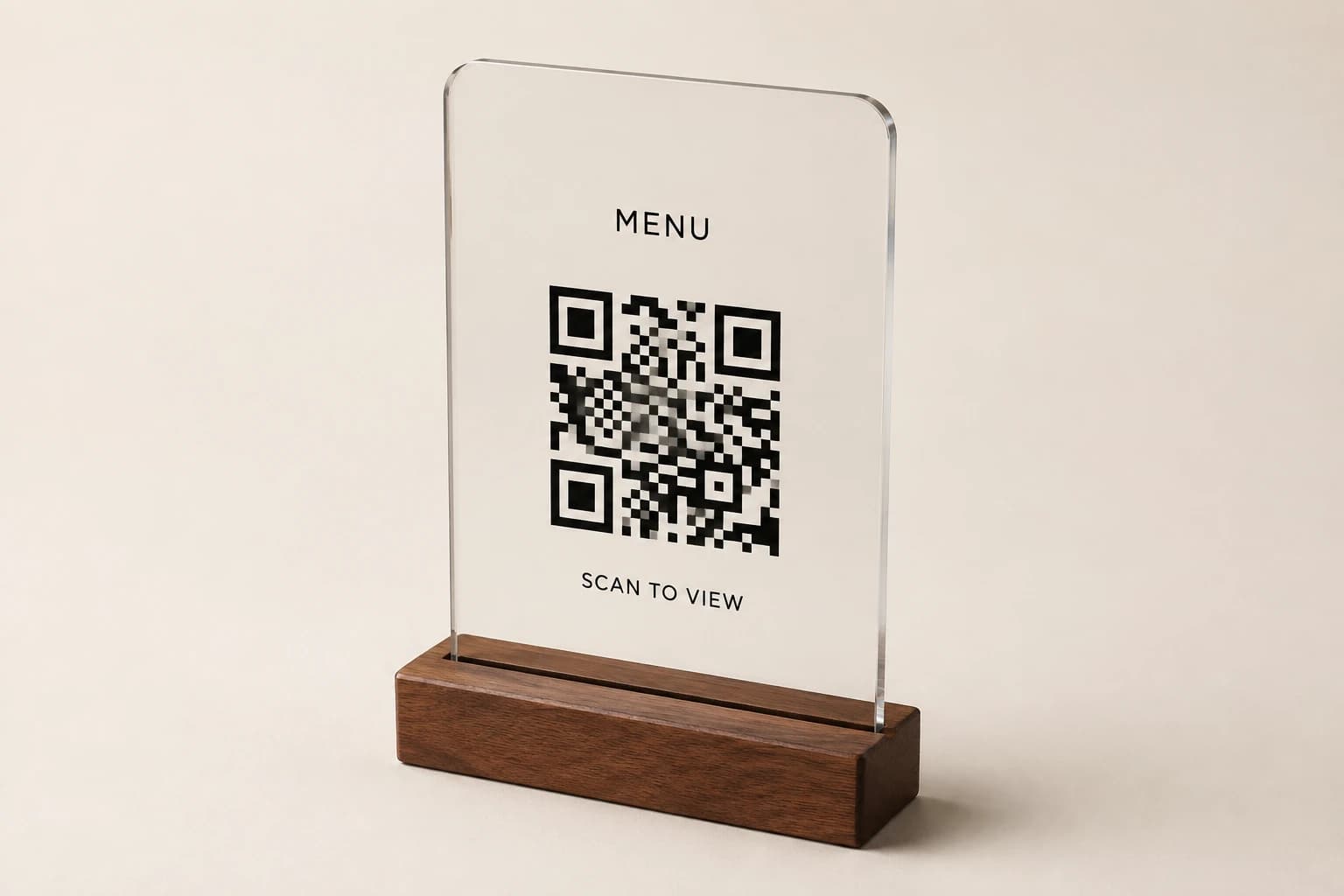

Illustrative example: twenty-four numbers and eight reserved markers
Imagine a fictional restaurant with eighteen indoor tables and six patio tables. Its approved plan uses one number marker at each of the twenty-four positions. The operator wants eight generic reserved markers for simultaneous use and explicitly chooses two additional replacement number markers carrying approved numbers. The purchase contains 24 + 8 + 2 = 34 physical objects.
Load the calculator with twenty-four table positions, one number marker per position, eight additional reserved markers and two spares. The result is thirty-four. The downloadable worksheet keeps the active indoor and patio numbers, reservation pool and specified replacements separate. It does not supply the actual number sequence; a real order needs that approved inscription list.
The two replacement markers in this example are intentional extra copies of particular numbers. They are not two blank signs, and they are not a recommendation to buy a fixed percentage of spares. Identify the exact repeated inscriptions before production. If you instead want two blank holders and a set of replacement inserts, change the construction and component inventory explicitly.
Suppose the restaurant joins two indoor tables for one event. The service team decides how those positions should be identified during that event. The purchased inventory does not automatically change, because the restaurant may return to its regular layout later. Treat temporary allocation and permanent purchasing quantity as separate decisions.
Count the physical signs in the article example
Load the fictional article example, then replace the counts with your approved service layout.
Method: Multiply entered table or unit count by pieces per unit and add explicit shared pieces and spares. No table allocation or spare percentage is inferred.
Build your plan
Count separate dining areas and event layouts before entering the table total. Spares are an explicit input.
Use the article’s example files
This file contains fictional planning entries. Replace them with your approved layout, destinations or wording and complete the article’s review before using them in production.
Use the count that matches the operating role
Compare the customer action and operating requirement for each option.
| Option | What it supports | What must be decided separately |
|---|---|---|
| Active table number | A specified identity at an approved service position. | A continuous number sequence or one marker per guest. |
| Generic reserved marker | A reusable temporary status marker. | One physical sign for every booking over an entire day. |
| Named reservation insert | Approved event or guest-facing wording for a particular use. | A reusable holder or permission to display private booking details. |
| Replacement number | An explicit additional copy of a stated inscription. | An interchangeable spare for any missing number. |
| Two-sided tent | One physical object with the approved information on each face. | Two complete objects merely because two faces are visible. |
Review numbers as identities, not just a total
Check the proof against the approved table sequence, including skipped values, prefixes and any zone distinctions. A set containing twenty-four number signs can still be wrong if one number appears twice and another is missing. Review the mixture as well as the physical total.
For repeated designs, include representative numbers with different widths and character combinations in the layout review. A single narrow digit can look balanced while a longer zone prefix exposes a spacing problem. Ask for the final number set to be checked at the proposed size and visible area rather than approving only the first sample.
Keep the reserved wording and any other status messages in separate proof groups. If the two sides differ, label front and reverse explicitly. Staff should be able to understand which face is intended for guests and what happens when the marker is turned. The design review should account for the actual way the object will be used on the table.
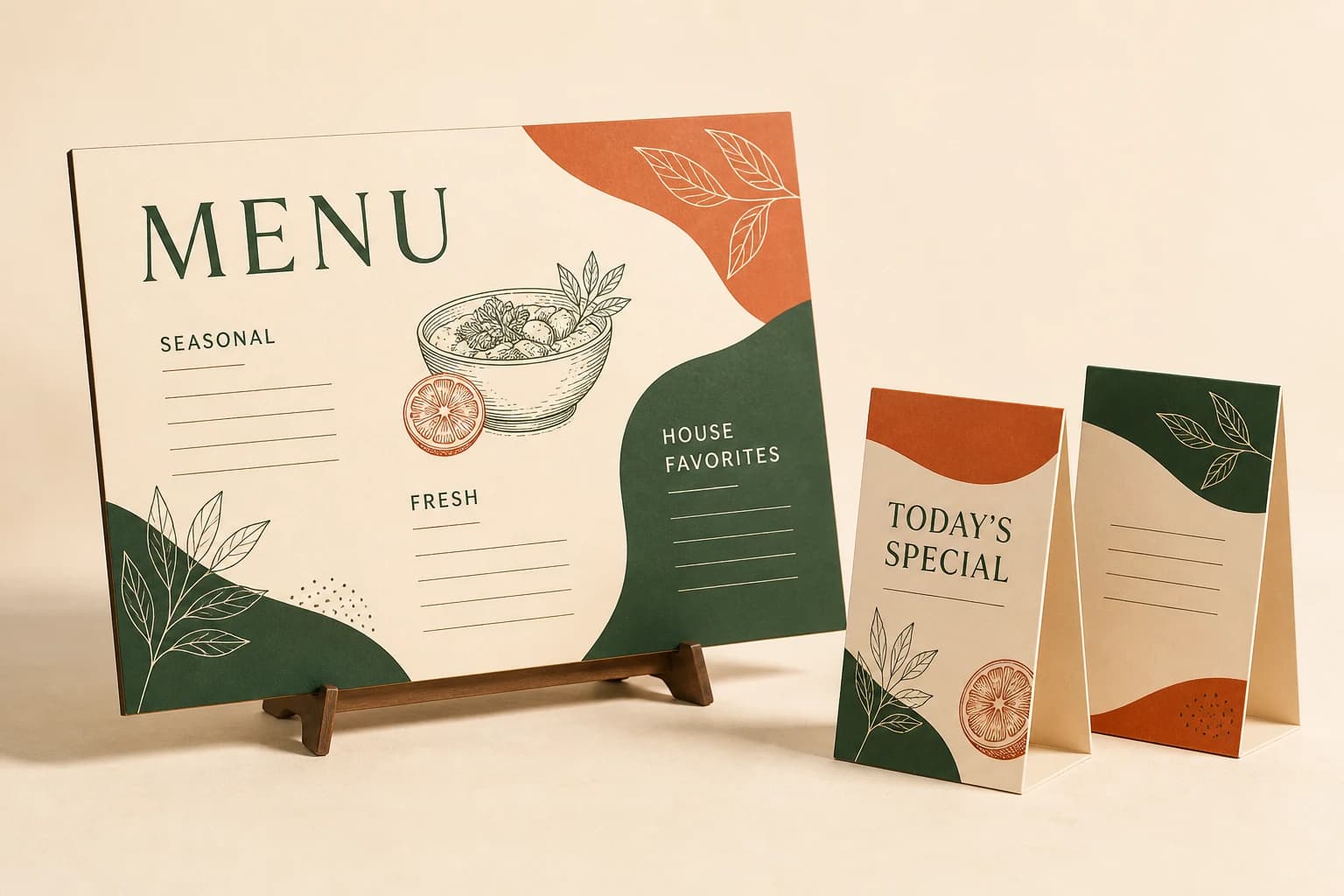
Test the object in a realistic place setting
Place a representative proposed sign where the restaurant expects it to sit, alongside the menus, glassware and other items normally present. Check whether staff and guests can find the number without moving unrelated objects. A product image on an empty background cannot show how the marker competes for space during service.
Describe the cleaning and handling conditions when asking for material advice. Ask production to confirm an appropriate construction and care method for those conditions. Do not assume every finish or printed layer can use the same cleaning process simply because two signs have the same base material.
Consider storage as part of the choice. A stack of separate cards, several freestanding tents and a set of holders may require different organization. Keep exact number sets and generic reserved markers easy to distinguish when staff reset the dining area. The object should support the service process after the first attractive photograph is taken.
Retain an inventory that makes small reorders specific
Keep the approved number list, design reference, dimensions and selected construction after delivery. Record a missing or damaged marker by its exact identity. A reorder for table 18 should identify whether it repeats the existing design and whether the restaurant also wants additional copies or a different layout.
If the service layout changes permanently, update the active inventory and separate retired numbers from available replacements. Do not quietly mix old and new numbering schemes in the same storage box. The next person ordering signs should be able to see which references remain in use.
Ask for a current quote for the specific replacement scope rather than assuming the original batch price applies to a small personalized order. A precise retained record makes the request easier to evaluate while leaving current production and delivery details to be confirmed.
Restaurant sign planning questions
Do I need one reserved marker for every table?
Only if your operating plan needs every table marked reserved at the same time. Count simultaneous use and explicit extras separately from the number of daily bookings.
Is the highest table number the quantity to order?
No. Use the approved list of active table identities. The sequence may skip numbers or include prefixes, and duplicate replacement copies add pieces without adding new identities.
Can one sign show a number and reserved status?
You can propose that design, but review how staff will display both pieces of information during service. Specify each face and confirm the actual construction rather than assuming a reversible object solves the workflow.
How should spare numbered signs be described?
Identify the exact inscription and copies for each spare. If you want blank or changeable components instead, specify that as a different construction and content process.
Explore the collection’s design direction
This existing narrated collection overview introduces the product designs. It provides visual background; the specific decision, comparison and worked example are in the article above. Images are original concepts rather than completed customer orders.
25-second overview
Explain the reference
A reference photo starts the conversation. Measure the real placement, identify what customers need to read, and separate fixed wording from information that changes. Keep the QR destination under your control and preserve its clear margin. Review a sample where the sign will be used. Then prepare quantities, artwork and delivery details for your quote.
Prepare your brief and request a written quote.
Bring this decision into your design brief
Choose a relevant product direction and include the measurements, quantity, approved wording and delivery destination for your project. We can then develop a specific design and quote around those requirements.
Sources and scope
The sources below support the cited technical details. The ordering workflows are editorial recommendations. Your project specification, price and schedule are established in the written quote and approved proof.
- WebstaurantStore: Bulk Restaurant Table Number Tents and Stands · checked 2026-09-05
Which buying guide should you read next?
All buying guidesChoose a Table Number Co host-stand sign by where guests first look and how the display will be supported. For worldwide orders, specify a countertop base, separate floor stand or wall mounting before choosing the face material. A sign face alone does not establish the footprint, height or hardware of the finished display.
A table sign maker's guide to numbering restaurant tables: four systems compared, point-of-view counting, POS naming limits from vendor documentation, combined and seasonal tables, numeral height by reading distance and a numbering worksheet, ending in a 32-table worked example.
Build the order around what each sign asks a guest or staff member to do. Count table numbers, menu links, reservation markers and permanent identity signs separately. Approve the destination of every QR code and the language version used at each venue.
Several restaurants can share one sign style while using different menu destinations. Match each code, artwork version and physical shipment to the intended location.