Table Number Co · buyer guide
How to Number Restaurant Tables: Zone, Prefix and Point-of-View Systems
Number restaurant tables in one direction from a fixed starting point, usually the host stand, and give each area its own block, such as 100s for the dining room, 200s for the bar and 300s for the patio. Table Number Co makes table number signs from $19 to $49 each and ships worldwide.
Reviewed 2026-09-05 · AI-assisted editorial review. General buying guidance; illustrative scenarios are not customer case studies. Images are AI-generated concepts.
This guide compares the four numbering systems restaurants actually use, shows a sample floor plan, and explains how to match numbers to your POS, handle pushed-together and patio tables, and size the numerals so staff can read them across the room. A downloadable worksheet helps you map every table before you order signs.
The goal is simple: any server, runner or host should find table 214 without asking. If a new hire needs a map taped to the wall, the system needs work.
What are the main table numbering systems?
Restaurants use four main systems: plain sequential numbers, zone hundreds, letter prefixes and point-of-view numbering. Sequential suits small rooms. Zone hundreds suit venues with several areas. Letter prefixes suit POS systems that allow letters. Point-of-view numbering decides where you start and which way you count, and works with any of the others.
Pick one system for the whole venue and stick to it. Mixing systems, such as numbers inside and names on the patio, is the most common source of wrong-table deliveries.
- Sequential: 1, 2, 3 and up across the whole venue. Easy for small rooms of about 15 tables or fewer. Adding a table later breaks the order.
- Zone hundreds: 101 to 116 in the dining room, 201 to 208 in the bar, 301 to 308 on the patio. The first digit tells staff the area.
- Letter prefixes: D1 to D16, B1 to B8, P1 to P8. Short and clear, but check that your POS and any online ordering link accept letters.
- Point of view: count from the host stand or kitchen door in one direction, usually clockwise, so neighbors have neighboring numbers.
How does zone numbering work?
Zone numbering gives each area its own number block, so the first digit names the area and the last digits name the table. Bar tables become 201, 202 and so on. You can add a table to one zone without renumbering the others, and staff learn the room faster.
Leave gaps for growth. If the dining room has 16 tables, the 100 block still has room up to 199. If you add a private room later, give it its own block, such as 400, instead of squeezing it into the dining room range.
Bar seats are a separate question. Many venues number bar seats on the POS seat map rather than with table signs, because a sign on every stool is clutter. If you want physical markers for bar seats, ask whether we can quote small numbered markers rather than tent cards.
Which table should be table 1?
Make table 1, or 101, the first table a guest or server reaches from the host stand, then count in one direction around the room. That point-of-view rule means table 104 is always next to 103 and 105, so staff can find a table by counting rather than memorizing.
Choose the starting point that matters most to the people who use numbers most. Hosts seat from the front door, but runners carry food from the kitchen door. If your runners struggle, number from the kitchen door instead. Either works if the whole team uses the same direction.
Snake rows in a grid: count left to right on the first row, right to left on the next. That way the last table of one row sits next to the first table of the next row.
How should table numbers match your POS?
Use the exact same number on the sign, the POS floor plan and the reservation system. Check your POS limits first. Lightspeed Restaurant K-Series, for example, allows a table name of up to four letters or numbers and says each name can be used only once across all floor plans.
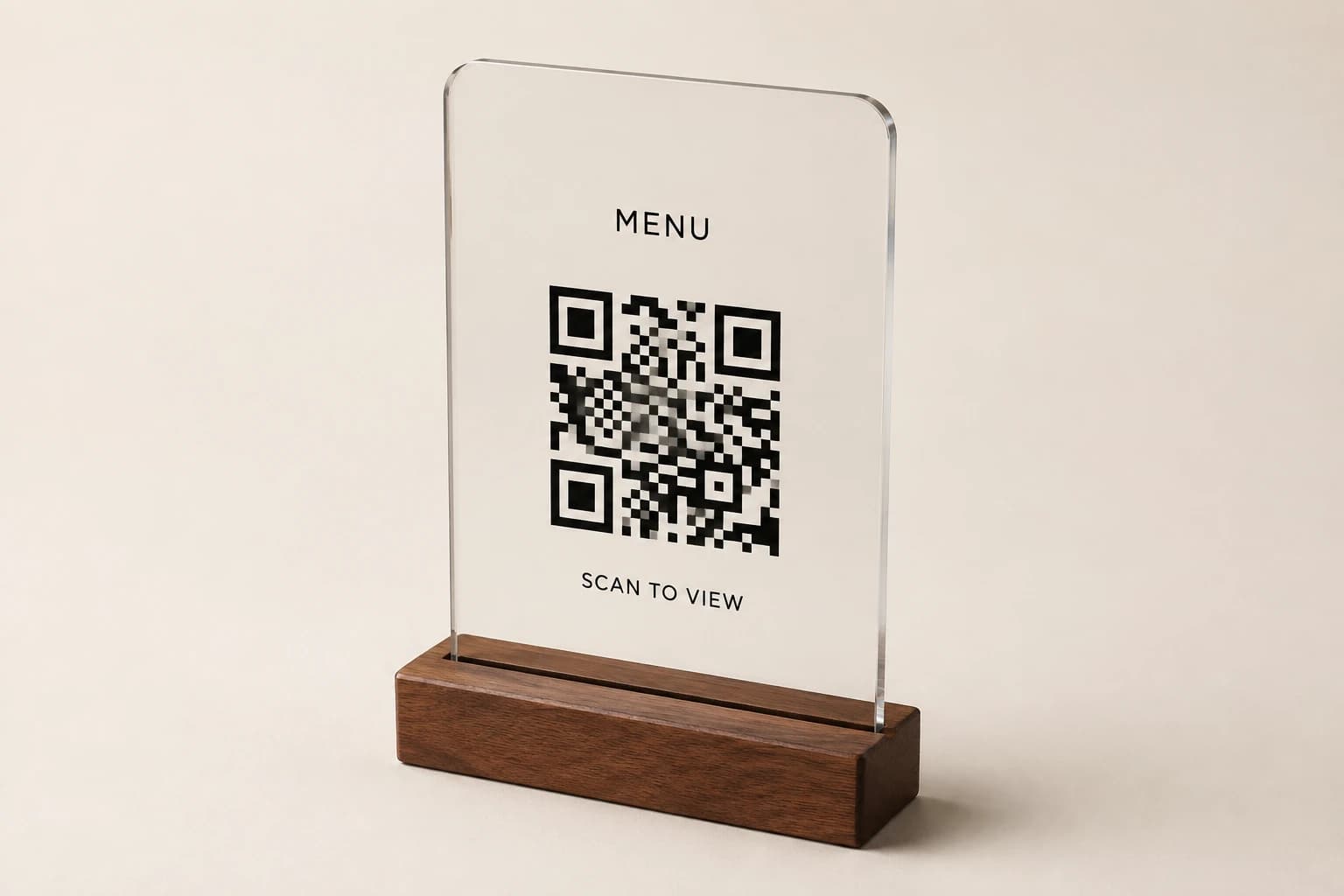
Lightspeed's own help article suggests prefixing bar tables with B and dining tables with D, which shows letter prefixes are a normal choice. It also lists a number-only Table ID for online ordering integrations that do not accept letters. If you use QR ordering or a third-party app, a fully numeric scheme like zone hundreds avoids two sets of names.
Before ordering signs, print your POS floor plan and walk the room with it. Every physical table should match one POS table, and every POS table should exist in the room. Retire numbers for removed tables instead of reusing them for a different spot.
Sources: Lightspeed Restaurant: Creating and managing floor plans and tables (K-Series)
Count your table number signs
The example uses the illustrative 32-table restaurant: 32 tables, one sign each, 4 reserved signs and 2 spares, for 38 pieces.
Method: Multiply tables by signs per table, then add separately entered reserved or service signs and the spares you choose. No buffer is assumed.
Build your plan
Count separate dining areas and event layouts before entering the table total. Spares are an explicit input.
Use the article’s example files
The worksheet lists each table with its area, number, seats, combinations, season and sign faces. Rows marked ILLUSTRATIVE are sample data; replace them with your own tables before sending the sheet with a quote request.
How do you number pushed-together, patio and seasonal tables?
When two tables are pushed together, keep the lower number on the POS and leave both signs on the table, or remove the higher one. Patio and seasonal tables keep their own zone block all year, even when stored, so the numbers never move inside the restaurant during winter.
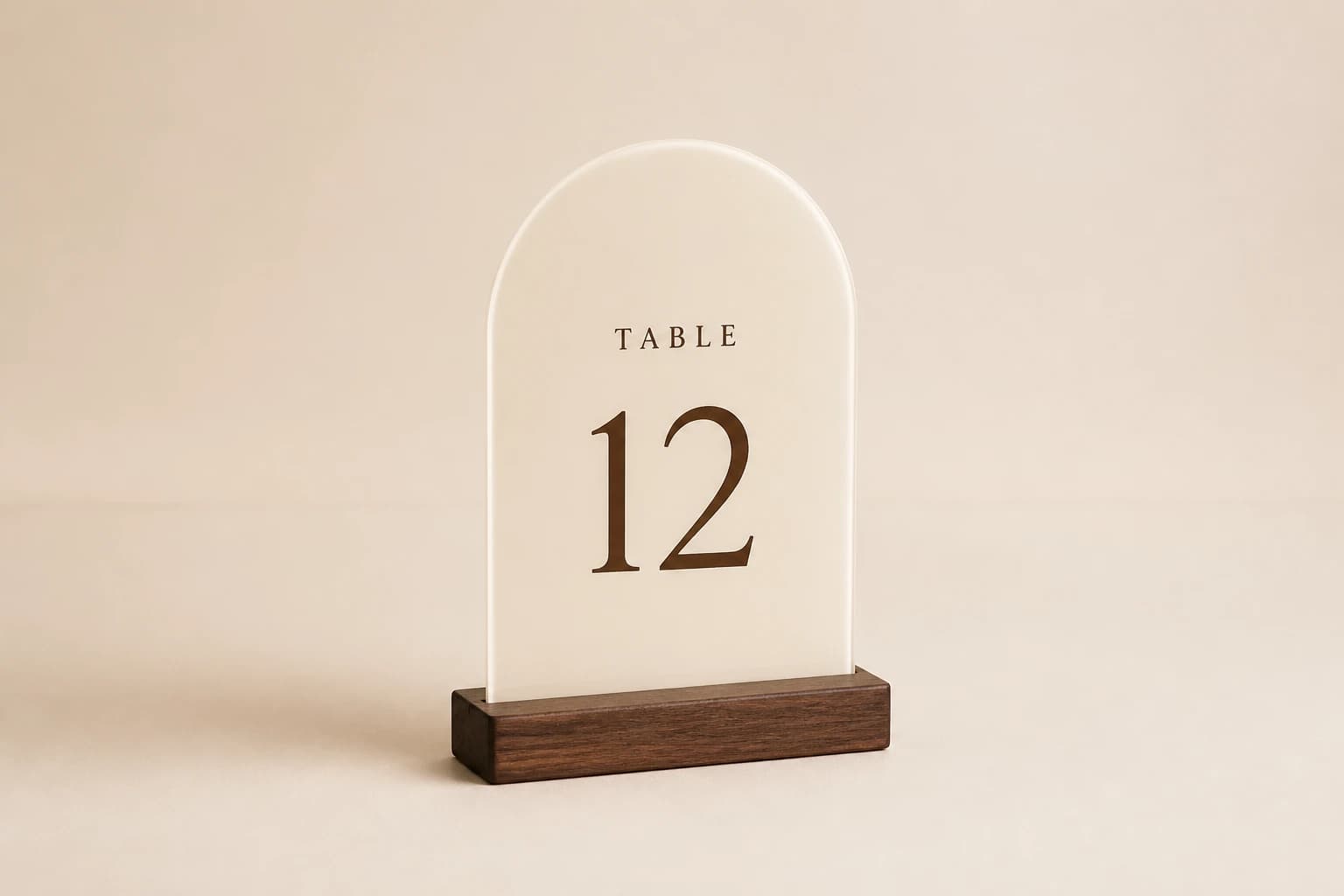
Write combinations down. A worksheet line such as 101 joins 102 for parties of 8 stops two servers from ringing the same party twice. If you often join the same tables, a double-sided sign can show 101 on both faces so the number reads from either side of the long table.
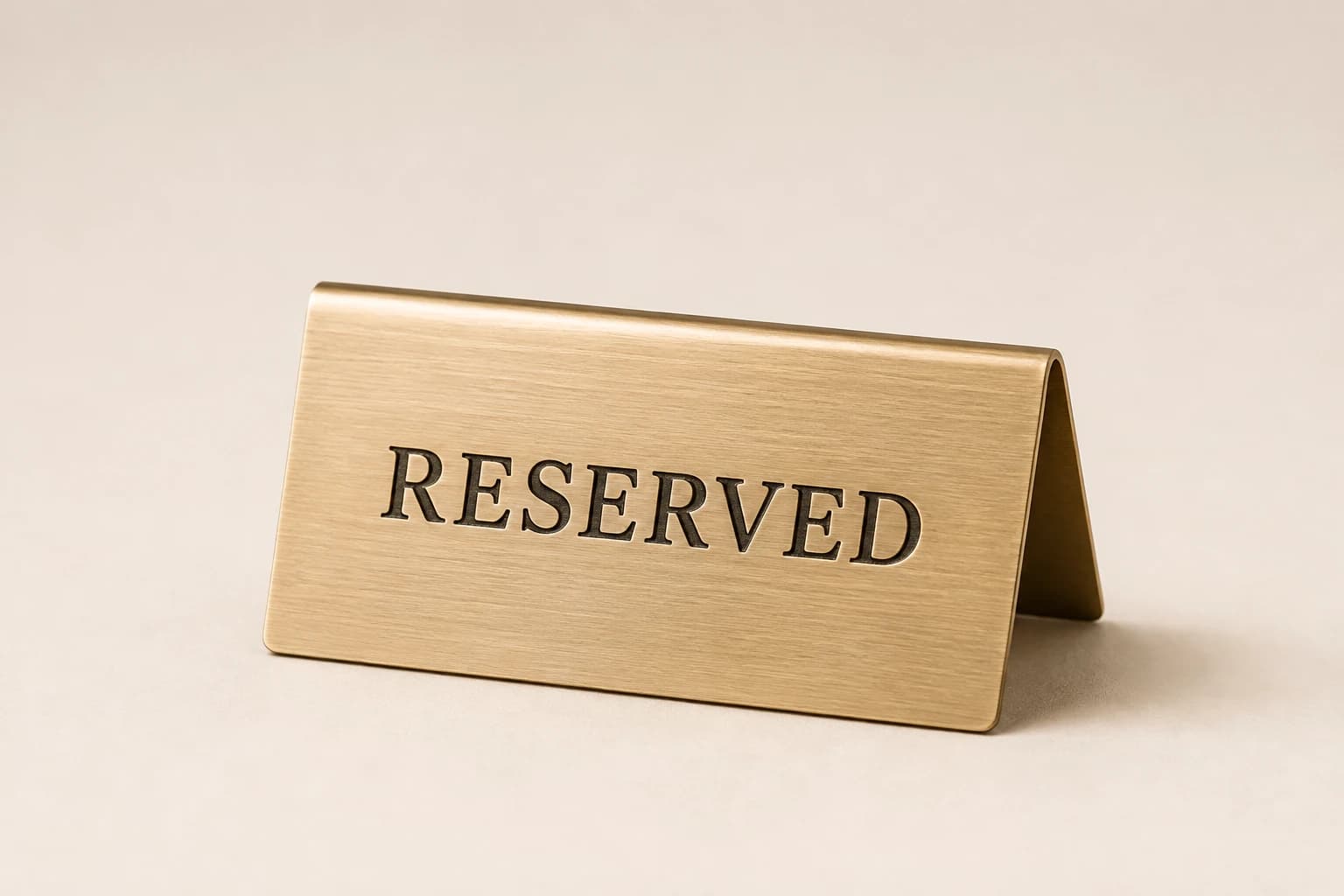
Private rooms and event layouts that change weekly are better served by changeable markers. Keep permanent table numbers for the main floor and use Reserved Table Signs for the event setup. Our guide on counting table numbers and reserved markers covers the totals.
How big should table numbers be?
Size numerals for the farthest point a server or runner reads them, not for the guest sitting at the table. As a reference, the ADA visual-character table uses 5/8 inch plus 1/8 inch per foot beyond 6 feet, which gives about 2.4 inches at 20 feet and 3.6 inches at 30 feet.
That ADA table applies to signs mounted 40 to 70 inches above the floor, so it does not govern a number standing on a tabletop. We use it only as a sensible scale. In practice, a server scanning from the pass needs larger numerals than a host walking guests to the table.
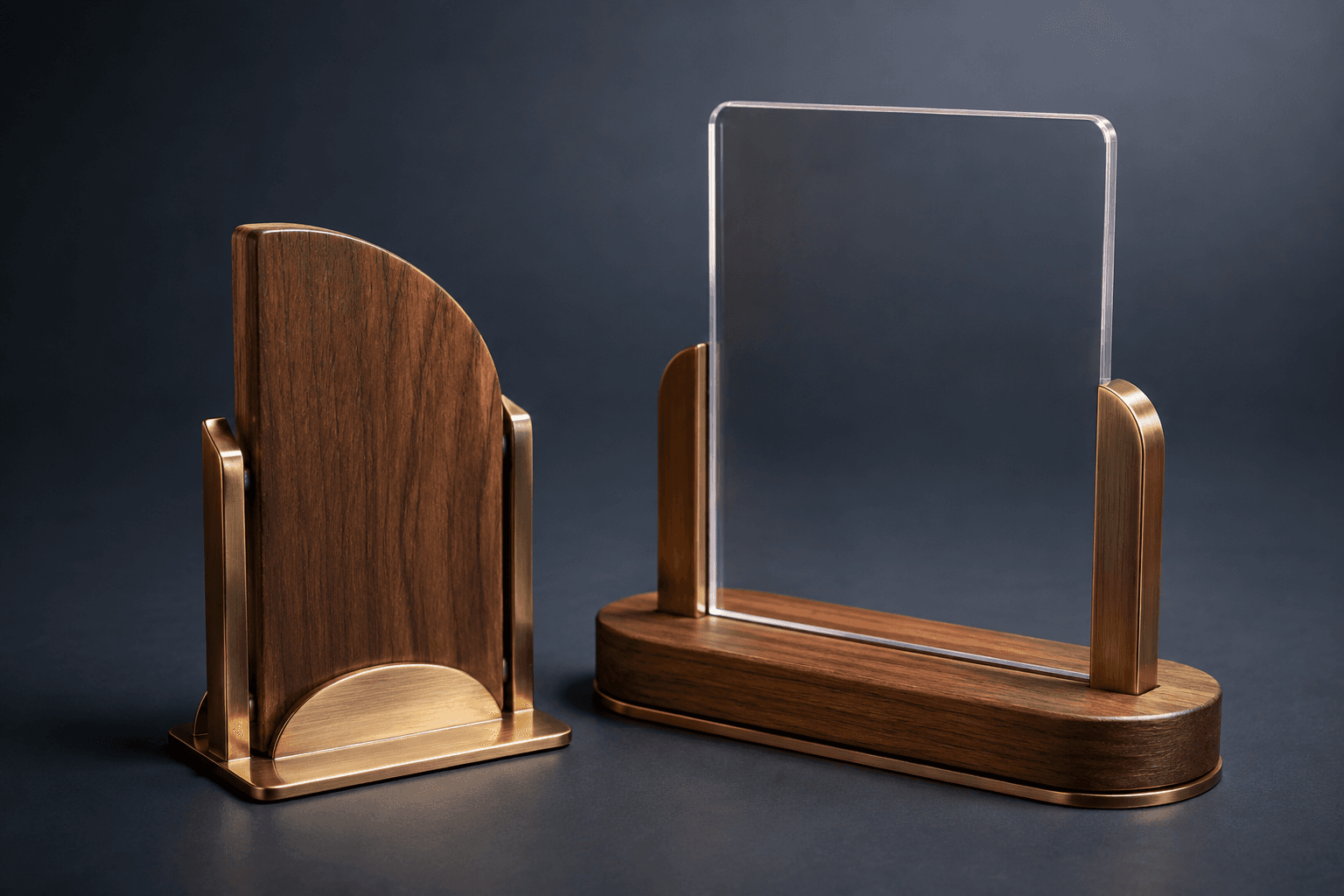
Our Custom Table Number Signs come in 3 by 4 to 4 by 6 inches, and the Restaurant Table Number Set is 4 by 6 inches per sign. Tell us your longest reading distance and we will show the numeral height on the proof. A bold, plain font reads farther than a thin script at the same height.
Sources: U.S. Access Board: ADA Accessibility Standards, 703.5.5 Character Height
Which table numbering system fits your restaurant?
Each system works when everyone uses it. Compare how each handles growth, staff training and POS limits before you choose.
| Option | Sequential (1, 2, 3) | Zone hundreds (101, 201, 301) | Letter prefix (D1, B1, P1) |
|---|---|---|---|
| Best for | One room with about 15 tables or fewer | Venues with two or more areas | Venues whose POS accepts letters |
| Adding a table | Breaks the order or adds an odd number | Use the next number in that zone | Use the next number after the prefix |
| Staff learning | Easy in small rooms | First digit names the area | Letter names the area |
| POS and online ordering | Numeric, works everywhere | Numeric, works everywhere | Check letter support and length limits |
| Sign text | 1 to 2 digits, very large numerals | 3 digits, slightly smaller numerals | 2 to 3 characters |
Illustrative example: numbering a 32-table restaurant
In this illustrative example, a fictional restaurant has 16 dining tables, 8 bar high-tops and 8 patio tables. It uses zone hundreds: 101 to 116 for the dining room counted clockwise from the host stand, 201 to 208 for the bar, and 301 to 308 for the patio.
Tables 101 and 102 often join for parties of 8, so both get double-sided signs and the POS keeps 101 for the combined check. The patio signs go into storage in winter, but numbers 301 to 308 stay reserved in the POS. All numbers are three digits, so they also work as number-only table IDs for the QR ordering app.
The sign count is 32 tables with one sign each, plus 4 reserved signs, plus 2 spare numbers for breakage, or 38 pieces. The longest reading distance is 30 feet across the patio, so the owner asks to see about 3.5-inch numerals on the proof. The layout and counts are invented to show the method.
Restaurant table numbering questions
How much do restaurant table number signs cost?
Table Number Co planning ranges are $19 to $49 per Custom Table Number Sign and $39 to $89 per sign in the Restaurant Table Number Set. Double-sided faces, a logo, a QR code or a special stand can move the price. Your written quote confirms the price, shipping and destination before you pay.
Should table 1 be by the door?
Usually yes. Put table 1, or 101, nearest the host stand and count in one direction so neighbors have neighboring numbers. If runners from the kitchen struggle more than hosts, start at the kitchen door instead. The rule that matters is one starting point and one direction for the whole team.
Do restaurants skip table 13?
Some do, for guests who find the number unlucky. Skipping it is harmless if the POS and the signs skip it too. Zone numbering softens the issue, because table 113 or 213 rarely bothers anyone. Whatever you choose, never leave a gap in the POS that does not match the room.
Should we use table numbers or table names?
Use numbers for service and names only as decoration. Names like Oak or Window are hard to put in order, may exceed POS name limits and slow new staff down. If you love names for a private room, put the name on a room plaque and still give each table a number.
How many table number signs should we order?
Order one sign per table you actually operate, including patio and private room tables, plus reserved signs and a few spares for breakage. Use the Table and Menu Sign Quantity Planner to total them. Production at Table Number Co takes no more than 7 days, and shipping time is extra.
Can table numbers be double sided?
Yes, double-sided signs suit long or joined tables and tables seen from two aisles. Count each physical sign once and tell us that both faces carry artwork. List which tables need two faces in the worksheet so the quote and proof show the right number of faces.
Sources and scope
The sources below support the cited technical details. The ordering workflows are editorial recommendations. Your project specification, price and schedule are established in the written quote and approved proof.
- Lightspeed Restaurant: Creating and managing floor plans and tables (K-Series) · checked 2026-10-03
- U.S. Access Board: ADA Accessibility Standards, 703.5.5 Character Height · checked 2026-10-03
Which buying guide should you read next?
All buying guidesChoose a Table Number Co host-stand sign by where guests first look and how the display will be supported. For worldwide orders, specify a countertop base, separate floor stand or wall mounting before choosing the face material. A sign face alone does not establish the footprint, height or hardware of the finished display.
Use the active table list for number signs and simultaneous use for reserved markers. Keep exact replacement numbers and two-sided objects clear in the count.
Build the order around what each sign asks a guest or staff member to do. Count table numbers, menu links, reservation markers and permanent identity signs separately. Approve the destination of every QR code and the language version used at each venue.
Several restaurants can share one sign style while using different menu destinations. Match each code, artwork version and physical shipment to the intended location.